




The residence runs beautifully all day, but what happens after the last scheduled shift ends? Choosing between live-in vs live-out household staff determines more than where a professional sleeps. It shapes privacy, coverage, residence flow, travel support, and the daily experience of everyone in the home.
Discuss your residence needs with The Calendar Group’s private household staffing specialists.
A live-in model can make sense when a residence has truly private staff quarters and needs dependable on-site presence around an unconventional schedule. A live-out model can provide excellent continuity while preserving a clearer separation between working hours and private family time. Neither option is universally better. The right choice reflects the household’s actual needs, rather than an assumption that more availability always creates better service.
Live-in vs live-out household staff at a glance
The Calendar Group recommends starting with the role and the residence’s real operating rhythm, not a preferred label. Map how the residence operates during a normal week. Then consider less frequent situations that still matter, such as entertaining, seasonal moves, early departures, or extended travel. This creates a practical view of the coverage the household needs.
| Decision factor | Live-in arrangement | Live-out arrangement |
|---|---|---|
| Privacy | Requires comfortable boundaries within a shared property | Creates greater separation outside scheduled hours |
| Coverage | Can suit early, late, or changing household rhythms | Works well with defined shifts and planned handoffs |
| Residence layout | Requires genuinely private and appropriate living quarters | Does not require staff accommodations |
| Travel | May complement frequent travel when the role is defined clearly | Can include travel with advance planning and clear expectations |
| Boundaries | Must distinguish on-site presence from working time | Daily departure creates a natural division |
| Continuity | Supports close familiarity with household routines | Relies on reliable schedules, notes, and team communication |
The central tradeoff
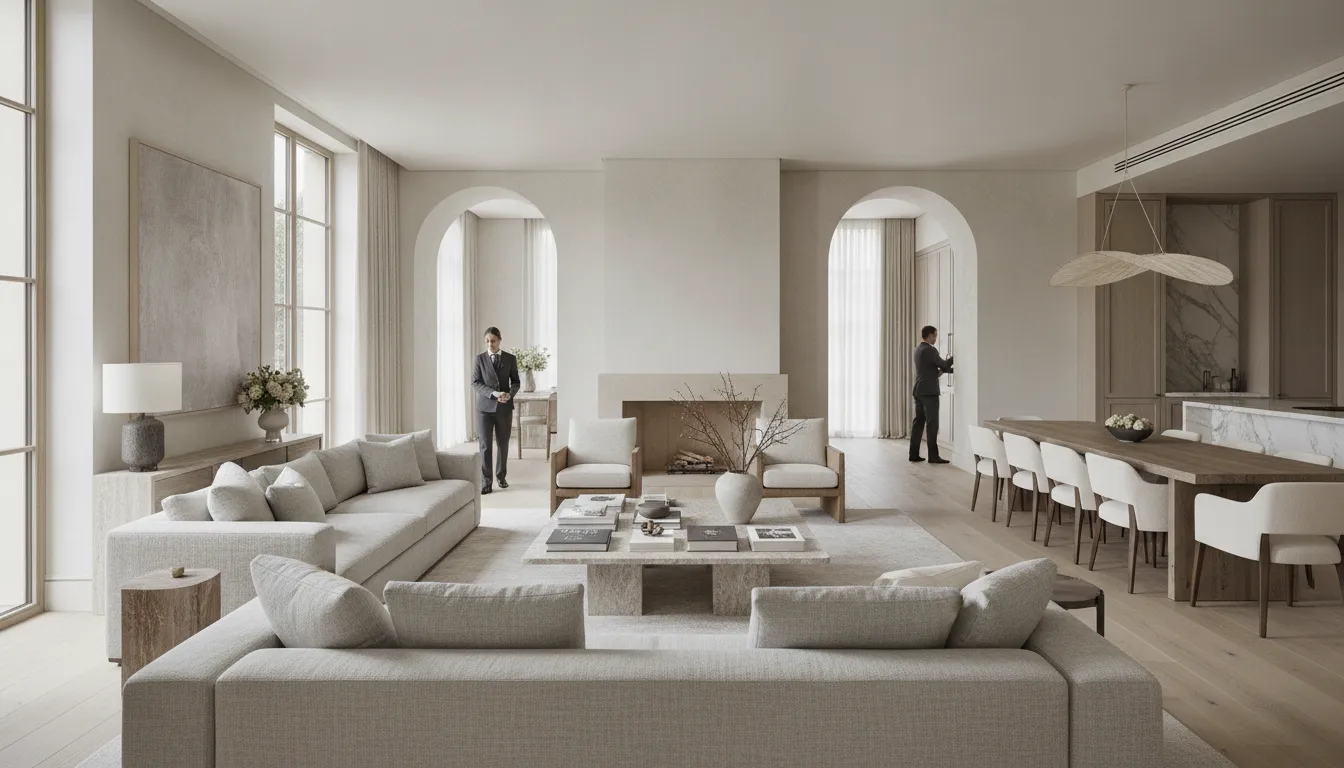
The central tradeoff is on-site presence versus separation. A live-in professional is nearby, but proximity should never be confused with constant duty. A live-out professional leaves at the end of a scheduled shift, but that does not mean the household must sacrifice responsive coverage. Thoughtful schedules and coordinated team roles can meet demanding needs in either model.
Begin with the role, not the room
A spare bedroom does not automatically make a live-in role appropriate. Likewise, a preference for privacy does not automatically rule out every on-site arrangement. Define the responsibilities, schedule, and service standards first. Review the range of private household staffing roles before deciding which living arrangement supports that role.
When does a live-in arrangement make sense?
In The Calendar Group’s placement approach, a live-in arrangement makes sense when on-site presence solves a genuine operational need. It may suit a residence with very early starts, late evenings, frequent guests, changing routines, or a location that makes a daily commute impractical. The arrangement works best when the employee also prefers this structure and understands the home’s rhythm.
Private accommodations are essential
Appropriate quarters should offer meaningful privacy and a place to rest away from household activity. The exact layout varies by property, but the space should feel like a private home base rather than an extension of the workplace. Separate access, a private bathroom, and distance from busy family areas can all improve fit.
Principals should evaluate the accommodations honestly. Consider noise, shared pathways, guest traffic, security routines, and whether the employee can be fully off duty while remaining on the property. If the space does not support real separation, a live-out structure may be more sustainable.
Presence is different from availability
The strongest live-in roles have clear working hours, responsibilities, communication preferences, and procedures for genuine urgent needs. An employee who is on the property should still be able to disengage after the workday. Clear boundaries protect both service quality and long-term satisfaction.
It should support the role’s actual rhythm
Live-in staffing can be useful when the role naturally includes changing coverage windows or close continuity across days. However, the arrangement should not be used to compensate for an unclear job description. If the residence routinely needs broad coverage, a team structure may be more appropriate than expecting one person to cover every need.
Why many private residences prefer live-out staff
The Calendar Group often finds that a live-out arrangement gives the household and employee a natural daily separation. This can be valuable for principals who place a high priority on privacy after working hours. It can also help define a professional rhythm in residences where duties fit well within reliable shifts.
Clear daily boundaries
Arrival and departure times make it easier to distinguish working hours from personal time. This clarity can support focused service during the day and allow the household to enjoy private evenings. The employee also returns to an independent home environment after each shift.
No need for on-site quarters
A defined live-out schedule can suit positions such as an executive housekeeper or family assistant. Not every residence has suitable private accommodations, even when the property is large. A live-out model avoids forcing a shared-space arrangement that may feel uncomfortable. It also preserves guest rooms and other areas for the household’s intended use.
Coverage still requires careful design
Live-out staffing works best when commute realities, start times, handoffs, and backup plans are considered in advance. For households that need coverage across a long day, multiple coordinated professionals may provide a better solution than stretching one role beyond a sustainable schedule.
Shared calendars, concise handoff notes, and consistent communication can create excellent continuity. When responsibilities are clear, the household can receive polished service without relying on someone living on the property.
How to choose the right staffing arrangement
The Calendar Group uses a structured, consultative process to help principals move past broad pros and cons. Use the following steps to translate household preferences into a role that strong candidates can evaluate clearly.
- Map a normal week. Record when service is truly needed, including starts, finishes, meals, errands, entertaining, and quiet family time.
- Identify recurring exceptions. Note travel, seasonal moves, guest periods, and events that change the usual schedule.
- Assess the residence honestly. Decide whether the property provides private, comfortable accommodations with genuine off-duty separation.
- Define privacy preferences. Consider when the family wants staff presence and when it strongly prefers the residence to feel private.
- Separate presence from duty. Clarify scheduled hours and how unusual needs will be communicated and covered.
- Consider the local candidate market. Commute length, location, and the preferences of qualified candidates can affect which structure is realistic.
- Test for long-term fit. Ask whether the arrangement will still feel appropriate after the novelty of a new placement has passed.
Look for patterns, not isolated moments
A single late dinner or early airport departure should not determine the entire staffing model. Focus on patterns that occur often enough to shape the role. Less frequent needs can often be addressed through advance scheduling, team coverage, or travel planning.
A hybrid team can solve complex coverage needs
The choice does not always need to apply to every member of a household team. For example, a live-in position can work alongside a live-out butler or personal valet with defined service windows. Some residences use an on-site role for continuity while other professionals work defined live-out shifts. A carefully designed team can balance privacy, expertise, and coverage more effectively than a single universal arrangement.
How residence layout and privacy shape the decision
Residence design has an outsized influence on whether live-in staffing feels natural. Square footage alone is not enough. The important issue is how people move through the home and whether staff quarters allow genuine privacy.
Evaluate shared circulation
Consider which entrances, hallways, kitchens, outdoor areas, and security checkpoints are shared. An employee may have a private bedroom but still need to cross active family areas whenever leaving or returning. That can make off-duty time feel less private for everyone.
Consider the household’s guest patterns
Frequent entertaining can change how a live-in arrangement functions. Guest arrivals, late events, and use of common areas may affect the employee’s ability to rest. The residence should support both polished service during working hours and appropriate separation afterward.
Be candid about privacy preferences
Some principals value the reassurance of someone nearby. Others prefer the property to be entirely private after the day concludes. Both preferences are reasonable. Problems arise when the desired level of privacy is not discussed before the search begins.
A placement process should give qualified candidates an accurate picture of the accommodations and household rhythm. The Calendar Group’s client-focused approach helps private decision-makers define the role and consider fit before interviews begin.
Plan for travel, boundaries, and long-term fit
The Calendar Group treats travel needs as an important part of role design, but they are separate from the employee’s home arrangement. A live-in professional may or may not travel with the household. A live-out professional may be an excellent traveler. Define travel frequency, destinations, expected responsibilities, and advance notice as their own set of considerations.
Make the everyday structure predictable
Private residences can be dynamic, but a role should still have a dependable foundation. Clear priorities, normal working windows, and communication standards help the employee respond well when plans change. Predictability also helps the household distinguish genuine exceptions from recurring needs that should be built into the role.
Match the arrangement to candidate preferences
Long-term fit depends on whether the professional actively wants the proposed arrangement. A highly qualified live-out candidate may not thrive in an on-site role. A professional who values a well-designed live-in structure may be less interested in a long commute. The search should assess these preferences early and transparently.
Define success before interviews
Start a focused candidate search with The Calendar Group.
Before meeting candidates, write down what excellent service should look like after three months and after one year. Include the desired household rhythm, communication style, privacy expectations, and coverage standards. These details make it easier to evaluate alignment beyond experience alone.
A residence-needs checklist before you begin a search
Use this checklist to prepare a clear staffing brief. It will help a placement partner and prospective candidates understand the opportunity accurately.
Role and coverage
- What are the position’s core responsibilities?
- Which coverage windows occur every week?
- Which needs are occasional rather than routine?
- Would coordinated roles serve the residence better than one broad position?
Space and privacy
- Are the proposed staff quarters truly private and comfortable?
- Can an on-site employee enter and leave without crossing active family areas?
- When does the household prefer no staff presence?
- How will off-duty time be respected and communicated?
Travel and changing routines
A position that includes frequent local transportation may also benefit from a dedicated chauffeur or driver rather than expanding another professional’s scope.
- How often does the household travel or move seasonally?
- Does the role require travel, residence coverage, or both?
- How much advance notice is usually possible?
- What routines change during guest stays or events?
Long-term alignment
- What communication style works best for the principals?
- Which qualities matter most beyond technical experience?
- How will performance and evolving needs be discussed?
- Will this arrangement remain comfortable as household needs change?
Once these details are clear, a specialist can help translate them into a focused search. Learn more about private household staffing and how The Calendar Group supports thoughtful placements for private residences.
FAQs about live-in and live-out household staff
Is live-in household staff always available?
No. Living on the property and being on duty are different. A successful arrangement defines working hours, off-duty time, responsibilities, and how genuine urgent needs will be handled.
Can live-out staff support an unpredictable schedule?
Yes. Strong schedule planning, advance communication, overlapping shifts, and coordinated team coverage can support changing needs without requiring an employee to live at the residence.
What accommodations should a live-in role include?
The residence should provide private, comfortable quarters that allow meaningful separation from household activity. The specific layout varies, but it should support rest, privacy, and clear professional boundaries.
Should travel needs determine the arrangement?
Travel is an important factor, but it should be defined separately. Either a live-in or live-out professional may travel successfully when expectations, duties, timing, and accommodations are clear.
Choose a structure built for lasting fit
The best staffing model reflects how the residence truly operates and what qualified professionals need to succeed. The Calendar Group can help you define the role, evaluate the arrangement, and identify candidates aligned with your standards. Begin your private household staffing search with a clear foundation for long-term fit.