
High End Housekeeper Standards for a Private Home
Set high end housekeeper standards for rooms, linens, surfaces, and inspection before you hire staff for a private residence.
By The Calendar Group · Reviewed by Nathalie Laitmon ·
A high end housekeeper is judged by the house on an ordinary Tuesday, not by a spotless first week. Principals notice the standard when a guest bath looks the same at 4 p.m. as it did at 8 a.m., and when marble, silk, and gilt age slowly because nobody guessed at the product. Write that standard before you hire, so a written room, linen, and inspection system keeps the result steady when the person on duty changes.
Call (877) 404-5290 to begin a search for private household staff.
Byline: The Calendar Group
What Does a High End Housekeeper Standard Cover?
The standard is a short written brief for the residence, not a personality test and not a job ad. It names the rooms finished every day, the rooms on a rotation, and the surfaces that need a named method. It also names who inspects, and what finished means for a new person on day one.
Keep the brief to one page per floor, plus a linen card and a surface card, because longer manuals get ignored once the week gets busy. A useful page covers four points: the daily reset, the deep-clean calendar, the surfaces that stay untouched without a method, and the defects reported the same day.
Separate the standard from the role. The housekeeper role is the person who works the rooms. The standard is the result you want whether one person is on staff or several share the work. If you later add a lead, the same page still governs the house.
How Should Rooms Be Zoned?
Zone the house by how it is lived in, not by how a floor plan looks. A primary suite, the kitchen a family uses, and the rooms guests see first belong in the daily zone. Empty guest rooms, a formal living room, storage, and staff areas belong on a rotation. Giving every room the same pass and calling that fairness is the mistake, because high-use rooms then slip while time was spent where nobody walked.
Write each zone as a sequence, not a pile of tasks. A daily suite sequence might run from opening the room, through the bed and the bath, to surfaces, and then to floors before the door closes. Floors come last for a reason. Vacuuming first, then walking the linen cart back through the suite, leaves a room that looks finished and still feels gritty underfoot.
Match the sequence to the household's day, since vacuuming during calls or resetting a kitchen while lunch is being plated is a standards failure even when the work is skilled. Note quiet hours, rooms that stay closed, and the hour by which the daily zone must be finished. A houseman often owns heavy floors, terraces, and moves, so say so on the zone card before two people both skip the same hall.
What Belongs on an Inspection Card?
Inspection is a short list, done with the lights on, not a speech after the fact. The person who inspects walks the daily zone at a set hour and marks pass or fail against visible points. Five to eight visible points per room is enough, and anything longer turns the card into a novel nobody finishes before the next room.
| Room | Check | Pass looks like |
|---|---|---|
| Primary bath. | Glass, stone, and metal. | No water spots. No product film. Towels squared. |
| Primary bedroom. | Bed and surfaces. | Crisp corners. No lint. Nightstands match the set layout. |
| Kitchen in use. | Counters and floor edge. | Clear work surface. No crumbs at the toe kick. Sink dry. |
| Guest bath. | Ready state. | Stocked. Lights and vents are dust-free. No prior guest trace. |
| Entry and stair. | First impression. | No grit in corners. Glass without prints. Mat straight. |
A fail means the room is redone before the next use, not that someone is scolded in the hallway. Keep a one-line note of what failed, who resets it, and whether the method or the product was wrong. Patterns matter more than one missed glass. Two weeks of the same fail means the card, the training, or the time budget is wrong.
If you are the only person inspecting, you will become the manager of the house by accident. Once more than one person shares the rooms, name a lead who inspects against the card. That is an operating choice, not a reason to rewrite the standard every time the team changes.
How Do Linen and Laundry Standards Stay Exact?
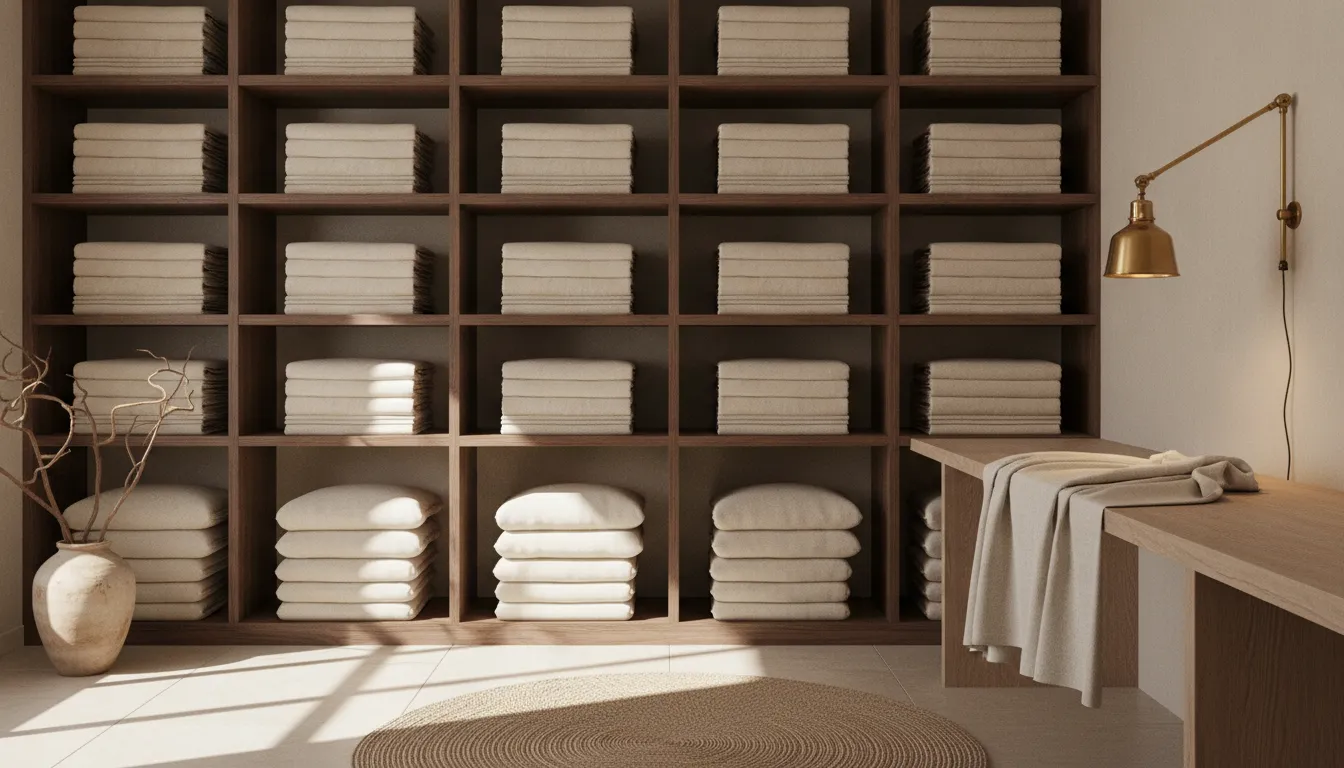
Linen fails quietly, and a closet can look full while it is short one king set or stuffed with tired sheets that pill because nothing was rotated. The standard is a count, a fold, and a rule for what leaves the house.
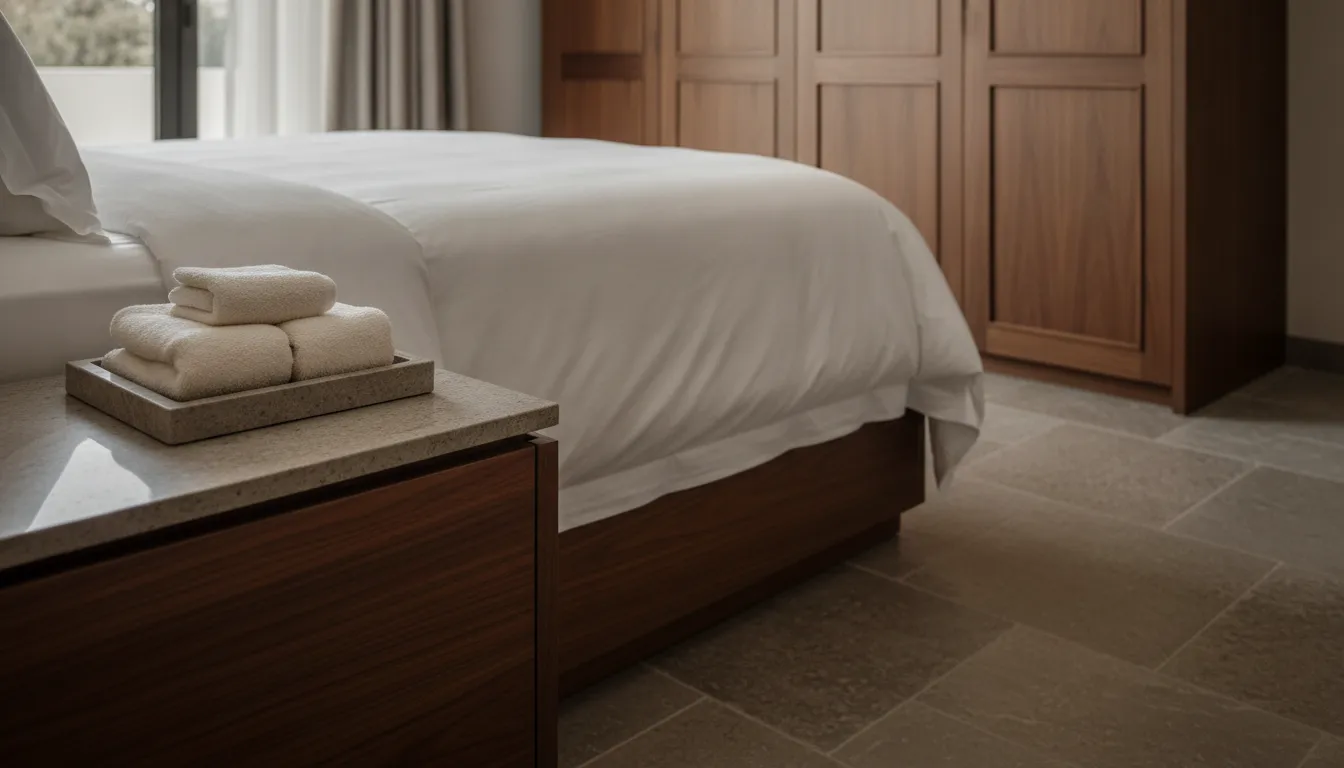
Count by set, not by shelf. A primary king might hold three complete sets in rotation: one on the bed, one in the closet, and one at the laundry. Guest rooms that open for visits need a named spare, stored where the person on duty can find it without a search. Label the shelf with size and room, because a beautiful stack with no label is inventory you cannot trust.
Write the laundry rule in plain language. Fine knits, silk, and embroidered table linen go to a specialist rather than through a hot wash on a rushed day. Everyday cotton has a temperature, a dry method, and a fold. The laundress role exists in many homes exactly so this rule has an owner. If one person does both rooms and laundry, the card still names which hours are protected for linen, or rooms will always win and the closet will thin out.
Retire pieces on purpose. Stains that survived two correct washes, thin spots, and popped embroidery leave the guest rotation the day they are found. Keeping them aside without a label is how they return to a principal's bed.
Which Surfaces Need a Written Method?
A private residence with artwork, antiques, or delicate stone is damaged more often by a careful person using an incorrect product than by ordinary dust. The standard identifies the surface, the approved product, the implement, and anything prohibited, so nobody substitutes a bottle that merely seems similar.
- Marble and limestone. Use a stone-safe cleaner and a soft cloth. Never use vinegar or powder.
- Oiled or waxed wood. Dust with a dry cloth, then the household's named conditioner. Never use a silicone spray.
- Gilt, lacquer, and antique frames. Dust only, and only with the tool the conservator approved.
- Silk, horsehair, and pale upholstery. Vacuum on low with a covered tool. Spot treatment stays with the named vendor.
- Art glass and mirrors. Use the cloth and side specified for that piece, so spray never hits a frame.
Put the product list on the inside of the supply cupboard, with a photo if two bottles look alike. When a product runs out, the replacement is the same product, not a close one from a run to the store. If a surface has no method yet, it stays off limits until you write one, and that single rule prevents the most expensive mistakes.
How Does a House Stay Ready for Guests?
Guest readiness is a countdown, not a scramble the afternoon people arrive. Three days out, inspect the room against the card and pull missing linen from the labeled spare. One day out, stock the bath to the household's list and make the bed for arrival instead of leaving it for morning. On the morning itself, reset only the glass and the floors, then confirm the closet holds nothing from the last guest.
Write the stock list once, covering hand towels, a robe if you provide one, water, and a noted scent or none at all. Changing the list per guest is fine, but changing it from memory is how a room feels unfinished. During the stay, the standard is a refresh window that does not cross the guest's use of the room, and that window belongs in the countdown.
Openings after a closed period follow the same logic at a larger scale. A residence that sat for weeks needs a deep pass on the rotation rooms before anyone treats it as daily work. Pair that pass with the private household staffing plan for who is actually on site, so the card is not a wish list for a team that has not arrived.
Call (877) 404-5290 to define the right household staffing standard.
Who Owns the Standard Once More Than One Person Works?
One person can hold the standard in their head, but two people cannot if you want the house to look like one house. Ownership splits into three layers. The principal, or the household manager, approves the card and the product list. A lead inspects and trains hands-on. Each person on the floor executes one zone and reports damage the same day.
Training is a demonstration, not a link to a file. The lead cleans one bath or makes one bed while the other person watches, then they switch and the second person repeats the sequence. That is the whole lesson. Correct the method in the room, at the moment, and update the card if the correction should stick.
Reporting stays narrow: loose hardware, a new stain, a product that marked a surface, or a short linen count. Those notes go to the lead the same day, and everything else is noise. An estate manager should see patterns, not a diary of every folded towel.
- Approve the one-page zone card and the surface list.
- Count linen by set and label the shelves.
- Set the daily inspection hour and the five checks.
- Demonstrate one room, then have the sequence repeated.
- Review fails once a week and change the card or the time budget.
Where Should You Stop Short of a Full Manual?
Stop when a new person can finish the daily zone without asking how this house works. If the card needs a chapter on tone, uniforms, or the history of the family, it has left the standard and become something else. Keep those rules in the household's operating notes so they do not bury the room result.
Also stop before you copy a hotel manual into a private home. Hotel language assumes a night shift, a public corridor, and a branded amenity program. Your house has quiet hours, art that cannot be sprayed, and a family living in the rooms being cleaned. Borrow the idea of a written check, then drop the hotel script.
Read the card aloud once before anyone works from it. If a sentence needs an explanation to make sense, rewrite that sentence. The person responsible for the floor should recognize the inspection, the approved product, and the failure condition without a separate meeting. That read-through also reveals a requirement that conflicts with the way the household actually lives.
How Should the First Month Use the Card?
Treat the first month as proof, not as a grace period with no record. For ten working days, the person on the floor marks the daily zone complete at the set hour, and the inspector walks the five checks and writes only the fails. At the end of those ten days you should know which rooms were underestimated, which product is wrong, and whether linen is actually rotating.
Do not add rooms in that first stretch. If the daily zone cannot finish, the zone is too big or the sequence is clumsy, and shrinking it is a correction while longer days only hide a bad card. A second pass on rotation rooms can wait until the daily zone passes three days in a row.
Week three is for the guest countdown, even if no guest is booked. Run it on one closed room: pull the spare set, stock the bath, and inspect the morning-of list. A drill shows whether labels and counts are real, so a real arrival is not the first test.
In week four, change only what the fails proved, because one edited line on the card is better than a new draft. Hold the card steady for the next month. A standard that moves every week trains people to wait for the latest version instead of learning the house.
When a residence is one of several, keep a card per house. Shared rules, such as stone products and linen retirement, can match, but sequences should not, because a city apartment and a weekend house do not live on the same clock. Note which card is in force on the supply cupboard of that house, so a traveling team does not import the other residence's hour.
Call (877) 404-5290 to talk through the standard your home needs.
FAQ
What makes a housekeeper standard "high end" in a private home?
Consistency and care of fine materials. The rooms look the same on an ordinary day, linen is counted and rotated, and stone, wood, and fabric have a named method. A single deep clean is not the standard.
How is this different from a cleaning visit?
A visit resets what it can see that day. A household standard names the daily zone, the rotation, the products, and the person who inspects. The result holds when the household is traveling, not only when someone is booked.
Do I need a lead if I have only one person?
No. One skilled person can work the card, and you or your household manager can inspect a short list. Add a lead when a second person shares the rooms, because two unwritten methods produce two different houses.
How often should the card change?
Change it when the house changes: a new surface, a renovation, a room that becomes daily use, or a repeated fail that the current sequence cannot fix. Do not rewrite it to match a new personality.
Should pay or schedules live on the same page?
No. Keep the room result on the card. Hours, housing, and offer structure belong in a separate conversation with whoever leads the search, so the standard stays usable on the floor.